Introduction
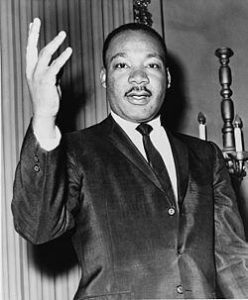
As America grappled with segregation and the push for civil rights, HBCUs emerged not just as academic institutions but as vital centers of social change and empowerment. During the late 19th and early 20th centuries, many HBCUs expanded their academic offerings and student populations despite facing persistent underfunding and systemic discrimination. These colleges were often the only places where Black students could receive higher education and prepare for leadership roles. HBCUs became hubs for intellectualism and activism, fostering generations of civil rights leaders like Martin Luther King Jr., Thurgood Marshall, and others.
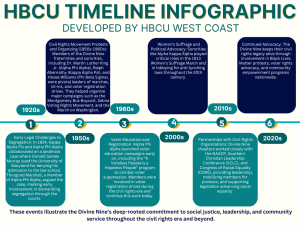
The vibrant campus life and academic rigor of HBCUs helped sustain their communities during this tumultuous period, even as segregation laws limited resources and access. The founding of the United Negro College Fund (UNCF) in 1944 was a pivotal moment, providing much-needed financial support and raising awareness of the importance of preserving these institutions. During the 1960s Civil Rights Movement, students at HBCUs were often at the forefront of protests and advocacy work, helping to push for legal and social changes. Federal legislation such as the Higher Education Act of 1965 recognized HBCUs as crucial contributors to American education and helped increase their funding.

Today, while HBCUs continue to face budgetary and infrastructural challenges, they remain powerful institutions that educate and inspire African American students and those from diverse backgrounds, maintaining a proud legacy of academic excellence and social justice.
Research
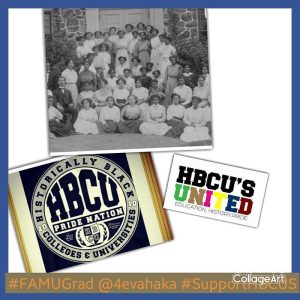
During the mid-20th century, HBCUs experienced significant growth both in student enrollment and academic prestige, becoming critical incubators for leadership and social activism within the African American community. Despite systemic inequalities and underfunding compared to predominantly white institutions (PWIs), these colleges and universities fostered a powerful intellectual and activist culture. Many HBCU students and faculty were at the forefront of the Civil Rights Movement, organizing sit-ins, marches, voter registration drives, and legal challenges against segregation. For example, the Student Nonviolent Coordinating Committee (SNCC), one of the most influential civil rights organizations, was founded by student activists at Shaw University, an HBCU in North Carolina.
Simultaneously, organizations such as the United Negro College Fund (UNCF), established in 1944, sought to provide financial assistance and raise awareness about the importance of HBCUs. The 1965 Higher Education Act legally recognized HBCUs and allocated federal funds to support their development, acknowledging their vital role in American education. This era also saw HBCUs expanding academic programs and improving infrastructure, even while grappling with funding disparities and social resistance.
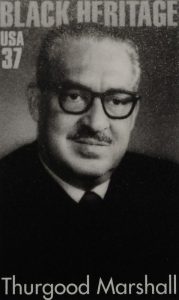
Leading figures such as Martin Luther King Jr., Thurgood Marshall, and Ella Baker emerged from HBCUs, highlighting these institutions’ importance not only in education but in shaping national civil rights policy and discourse. Post-civil rights, HBCUs faced new challenges due to greater educational access for Black students at other institutions, prompting many HBCUs to modernize programs and find new ways to remain competitive. Nevertheless, they have maintained their historical mission of empowering Black students through culturally relevant education, academic excellence, and social justice advocacy.